Services
Eleven procedures,
one at a time
Keep scrolling and each treatment builds itself in front of you. If you are not sure which one applies, everyone starts at the first.
Scroll to begin
01 / 11
Comprehensive periodontal evaluation
Pocket depths, gum recession, tooth mobility and bone levels, examined in full.
Digital X-rays and clinical photographs document the starting point and plan the treatment.
Caught early, periodontal disease has more conservative options and better long-term outcomes.
02 / 11
Non-surgical and surgical therapy
Scaling and root planing removes plaque and tartar, then smooths the root so it does not gather again as easily.
Flap surgery reaches deeper infection; pocket reduction makes daily cleaning possible again.
Regenerative procedures rebuild lost bone and tissue with specialized materials.
03 / 11
Laser-assisted periodontal therapy
An FDA-cleared alternative to traditional gum surgery.
The laser targets diseased tissue and leaves healthy gum alone — no scalpel or sutures in many cases.
Less bleeding, swelling and sensitivity, and a shorter recovery.
04 / 11
Treatment of gum recession
Recession exposes the root: sensitivity, and a higher risk of decay.
Connective tissue and free gingival grafts cover the root and thicken thin tissue.
AlloDerm and other allograft materials avoid a second surgical site.
05 / 11
Exposure of impacted teeth
Surgical exposure of impacted canines and other teeth for orthodontic treatment.
Coordinated with your orthodontist: the tooth is uncovered and a bracket or chain placed.
Minimally invasive, preserving the surrounding tissue and bone.
06 / 11
Biopsy and diagnosis of oral lesions
Evaluation of suspicious lesions, growths or tissue changes.
Incisional or excisional biopsy, analyzed by an oral pathology laboratory.
Oral cancer screening as part of routine periodontal care.
07 / 11
Esthetic and pre-prosthetic crown lengthening
Reshapes gum and bone to expose more of the natural tooth.
Corrects a gummy smile, or creates enough tooth for a crown or bridge to hold.
Improves cleaning access and the longevity of the restoration.
08 / 11
Simple and surgical extractions
Simple extractions for teeth that are visible and accessible; surgical for impacted teeth and broken roots.
Atraumatic technique preserves the surrounding bone and tissue.
Ridge preservation keeps the bone volume for a future implant.
09 / 11
Dental implant placement
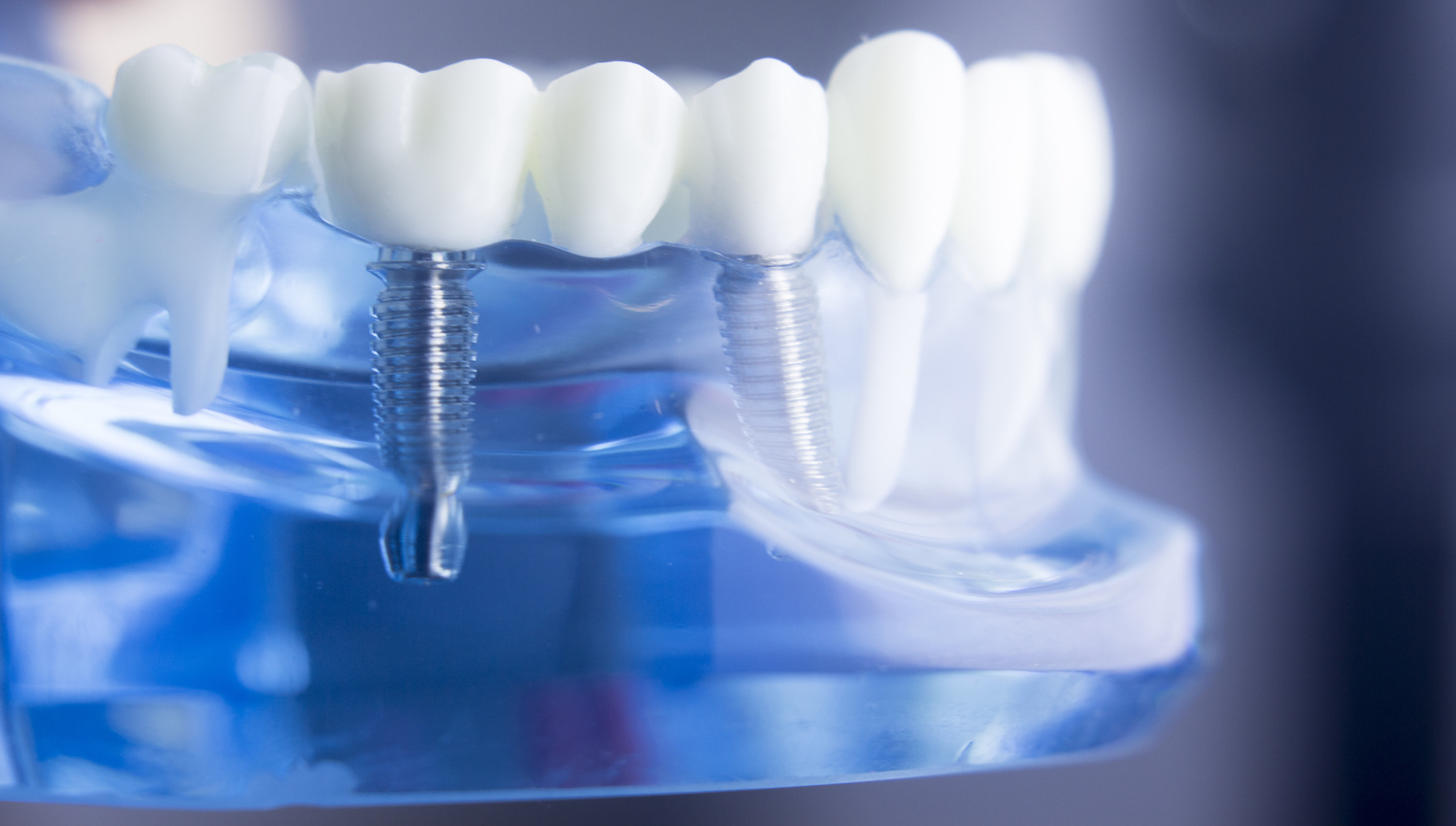
A titanium implant gives a replacement tooth its own foundation in the bone.
One implant for a single tooth; several to carry a bridge, without touching the neighboring teeth.
Implants preserve facial structure and prevent the bone loss that follows a missing tooth.
10 / 11
Site development for implants
Ridge augmentation rebuilds bone width and height before an implant can be placed.
A sinus lift creates enough bone volume in the upper jaw.
Socket preservation at the time of extraction keeps what is already there.
11 / 11
Full-arch implant solutions
A complete arch on four or six strategically placed implants.
Fixed in place — nothing to take out for cleaning or sleeping, and no adhesives.
Computer-guided surgery for precise placement, planned with your restorative dentist.
For referring dentists
Send us a patient in two minutes
The referral form takes the clinical detail you already have, and sends you a PDF copy of every referral for your records.
Not sure which of these you need?
Most people are not, on the first call. Book a comprehensive evaluation and we will tell you what we find, and what it would take to put right.